pathetic fallacy of the window itself. By prompting for "macro photography of rain droplets on aged glass, salt-residue textures, deep sapphire and slate tones, and a bokeh of a fading horizon," we captured the "liquid ghost" of the poem—a visual echo of a grief that refuses to evaporate."> pathetic fallacy of the window itself. By prompting for "macro photography of rain droplets on aged glass, salt-residue textures, deep sapphire and slate tones, and a bokeh of a fading horizon," we captured the "liquid ghost" of the poem—a visual echo of a grief that refuses to evaporate."> pathetic fallacy of the window itself. By prompting for "macro photography of rain droplets on aged glass, salt-residue textures, deep sapphire and slate tones, and a bokeh of a fading horizon," we captured the "liquid ghost" of the poem—a visual echo of a grief that refuses to evaporate.">
Cameron Brio

Tears Left in a Window

A Synthesis of Verse & Vision

The glass remembers every storm,
The salt-streaked trails of yesterday.
Where once the light was bright and warm,
The shadows now have come to stay.

A liquid ghost upon the pane,
A memory that will not dry.
We left our sorrows in the rain,
Beneath a cold and hollow sky.
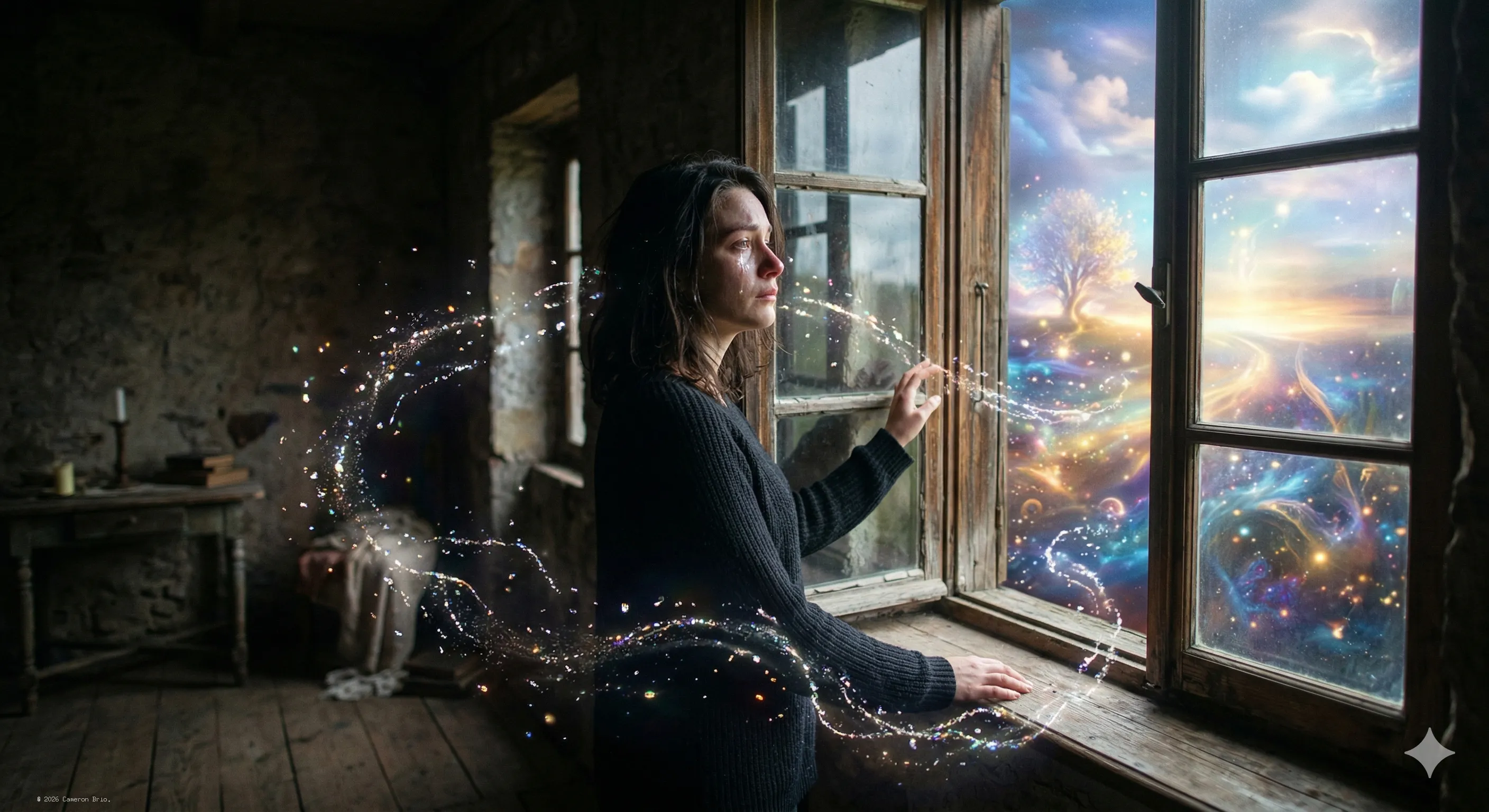
Tears Left in a Window - Visual Interpretation
CONCEPT: CAMERION BRIO • GENERATION: GEMINI AI

Behind the Prompt

To translate "Tears Left in a Window" into a visual medium, I steered the AI away from human subjects to focus on the pathetic fallacy of the window itself. By prompting for "macro photography of rain droplets on aged glass, salt-residue textures, deep sapphire and slate tones, and a bokeh of a fading horizon," we captured the "liquid ghost" of the poem—a visual echo of a grief that refuses to evaporate.

Tears Left in a Window